Week 7 · Early years, 1985 to 1997
Justifying My Choices
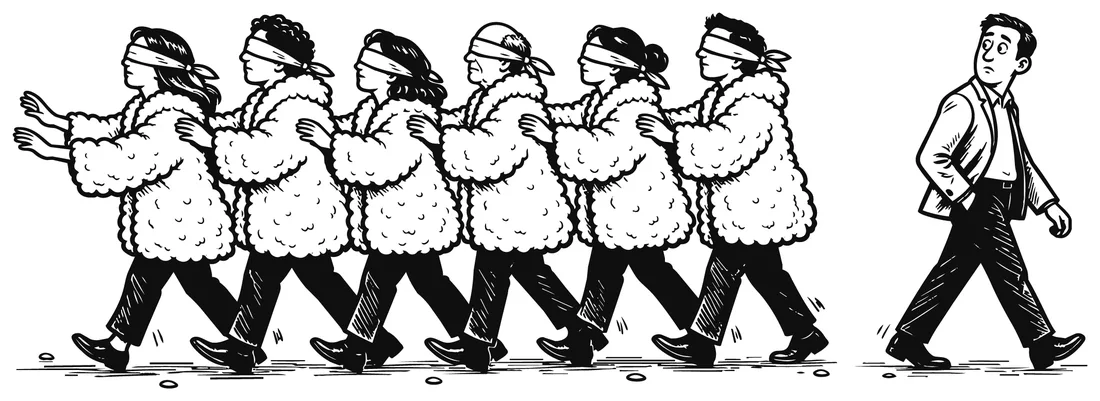
Turn off the external noise, calibrate the internal compass, and be willing to walk against the tide.
The leadership principle The Internal Compass
When you are subjected to this barrage of external questioning, you face a philosophical choice. You can spend your life trying to explain yourself to people who are committed to misunderstanding you. Or you can develop what I call the internal compass.
When you walk away from America. When you leave the family business. When you shut down a company. When you walk away from the CEO’s chair. There is an internal compass that tells you what you are doing is right.
The most liberating realisation of my entrepreneurial journey was simple. You do not need to justify your choices to the world. You only have to justify them to yourself first.
Before you make an unconventional move, you have to sit alone in a quiet room and interrogate your own motives with brutal honesty. Are you doing this out of ego? Out of spite? Are you running away from a problem, or running towards a vision? Lay out the internal logic, examine your risk appetite, and align the decision with your deepest values. If, after that internal audit, the compass points true north, the debate is over. You have justified it to the only person whose opinion ultimately dictates your reality.
You also have to make peace with the critics. Their criticism is rarely malicious. It is almost always born out of love, concern, or their own internal limitations. When a relative tells you that leaving a secure job is a terrible idea, they are not insulting your capability. They are projecting their own fears onto your canvas. They are looking at your life through their lens, calibrated by their risk appetite, their experiences, and their need for safety. You cannot be angry at a person wearing red-tinted glasses for telling you that the world looks red. You smile, acknowledge their perspective, and continue painting your work in the colours you know to be true. Also, the world operates on hindsight. They judge the validity of the seed based entirely on the size of the tree. Seeking their approval during the planting season is futile.
The burden of leadership is the burden of solitary conviction. You will not receive standing ovations for the hard choices. You will not get consensus on the bold moves. If everyone agrees with your strategy, your strategy is likely too safe to be of any consequence. True innovation, true growth, and true fulfilment live on the other side of convention.
Toolkit for the road
- 01
The Conviction Journal
Whenever you make an unpopular or contrarian business decision, do not try to convince the room. Go home and write a two-page document detailing exactly why you are making this bet. Date it. Seal it.
Why it works. Anchors your mental health. When the external backlash gets loud, you read the journal to remind yourself of your original, unclouded logic.
- 02
The Critic Filter
Categorise your critics. Accept criticism only from those who are actively in the arena – people who have taken similar risks. Politely note the rest.
Why it works. Prevents the projection of other people’s fears from polluting your risk appetite.
- 03
The Five-Year Re-Read
Five years after a major contrarian decision, re-open the conviction journal you wrote at the time. Compare what you predicted to what actually happened. Note where your reasoning held and where it broke.
Why it works. Builds a private dataset of your own decision-making, which is the only honest counterweight to the loud opinions of others.
Keep reading
Similar lessons
 An advisor hands you the map. A mentor hands you back yourself, in focus, so you can read the map you were already carrying. Week 6 The Mentor’s Mirror The Mirror, Not the Map Read lesson
 The day you stop being a student to anyone is the day you stop being a teacher to anyone. Week 8 The 60-Year-Old Student The Fear of Obsolescence Read lesson
 Ask if you are ready, and you will wait forever. Ask what another year of waiting costs, and you will move this week. Week 5 What Scares You at 40 The Leap of Faith Read lesson