Week 23 · Building the agency, 2009 to 2014
The Dignity of Labour
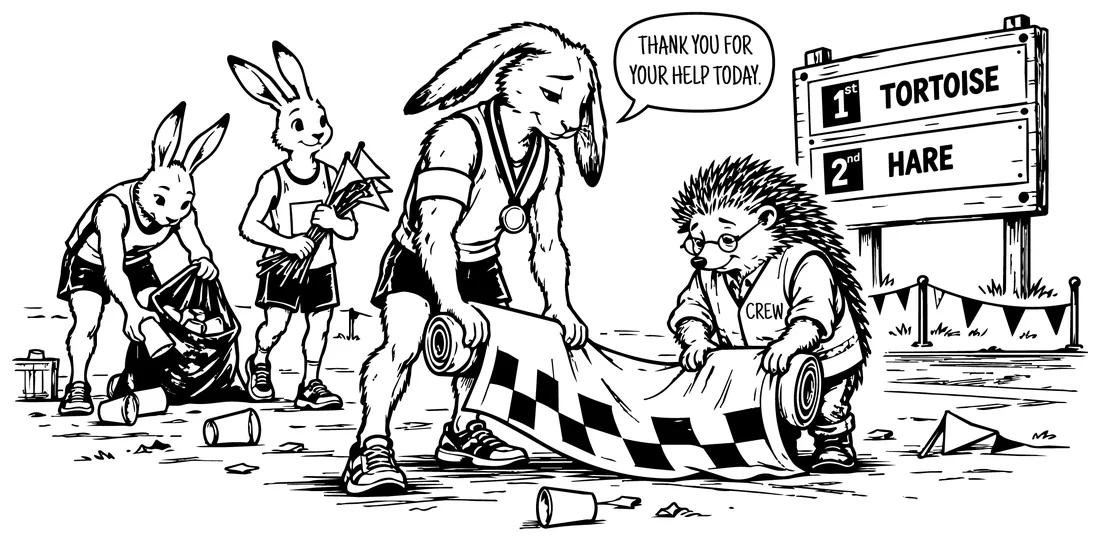
Anyone is courteous on a good day with an audience. The dignity of labour is discovered by your conduct on a bad day when nobody’s watching.
The leadership principle Criticise the Work, Not the Person
The character of a leader is most accurately measured not by how they treat the powerful – their investors, their clients, their board – but by how they treat the people who have no power over them. The lift man. The cleaner. The junior associate who delivered the wrong slide deck on a Friday afternoon.
The reason this matters operationally, beyond the obvious moral point, is that it determines what kind of company you are actually building. A company where the leader treats the powerless with full dignity is a company where the powerful – the senior executives, the prized clients, the difficult board members – receive feedback they actually need to hear. The dignity is the operating system. Without it, the senior people only get told what they want to hear. With it, they get told what they need to hear, in private, by someone who has earned the standing to say it.
A simple rule has carried me through thirty years of leadership. Be a stickler about the work. Be gentle with the person. The work has to be of the highest standard. The person has to know that no failure of the work will ever cost them their dignity. Both halves of that sentence are required. Drop either one and you have built something else.
Toolkit for the road
- 01
The Universal Greeting
Make it a personal mandate to greet every support staff member – lift staff, security, cleaners, drivers. The team will mirror the leader .
Why it works. Establishes, by demonstration, that dignity is owed to every person in the organisation, not only to the people on the org chart.
- 02
The Private Correction Rule
Establish a firm rule across leadership – praise happens in public; criticism happens behind a closed door. Apply the rule first to your own behaviour.
Why it works. Protects the professional dignity of the team and creates the psychological safety required for honest feedback to flow in both directions.
- 03
The Work-vs-Person Audit
Before delivering any piece of feedback, force yourself to write the sentence in two columns – what you want to say about the work, and what you almost said about the person. Deliver only the first column.
Why it works. Trains the muscle of separating the output from the human, which is the foundational discipline of any humane leadership culture.
Keep reading
Similar lessons
 The first client you fire for crossing the line defines the manner you would lead the team through the next thousand decisions. Week 24 Firing the Abusive Client Identify the Toxic Revenue and Prune Read lesson
 Most office wars are not started by what people meant. They are started by what the email could not carry. Week 20 The Digital Communication Gap Context is Trust Read lesson
 The vetoes you never use are the ones that keep the partnership alive. The vetoes you cannot use are the ones that kill it. Week 19 The Red Card Rule The Discipline of Trust Read lesson